Last reviewed: October 26, 2026
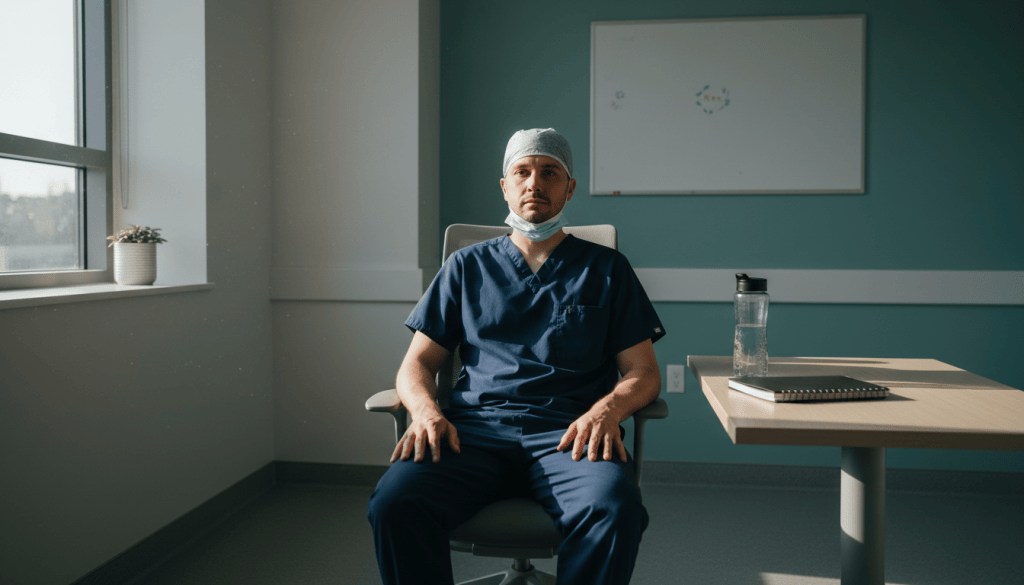
There is a strange part of surgical training that rarely appears in the operating-room photos: the hours after the shift ends. You have handed over the patients, walked out of the hospital, and technically your time is now your own. But your brain may still be running through the list, your sleep timing is upside down, and ordinary decisions—eat first or sleep first, answer messages or ignore them, stay awake until evening or go straight to bed—suddenly require effort.
Post-call recovery is not about finding a perfect “resident routine.” Different schedules, commutes, families, chronotypes, and call systems make that impossible. It is about understanding what overnight work does to you, protecting the first few hours after work, and making recovery deliberate enough that fatigue does not quietly follow you into the next clinical day.
The shift is over. The fatigue is not.
Surgical culture can make fatigue feel like something to overcome through discipline. That is a poor mental model. Night work disrupts sleep opportunity and circadian timing even when a shift is relatively calm. A 2025 prospective study of orthopaedic surgeons and residents found that residents’ total sleep fell by about 20% on home-call nights compared with their own baseline. A 2026 paired study of residents found greater sleep disruption and emotional exhaustion after ICU night shifts than after non-ICU nights. These studies do not describe every surgical program, but they reinforce a simple point: call has measurable effects that do not disappear at sign-out.
First priority: get home safely
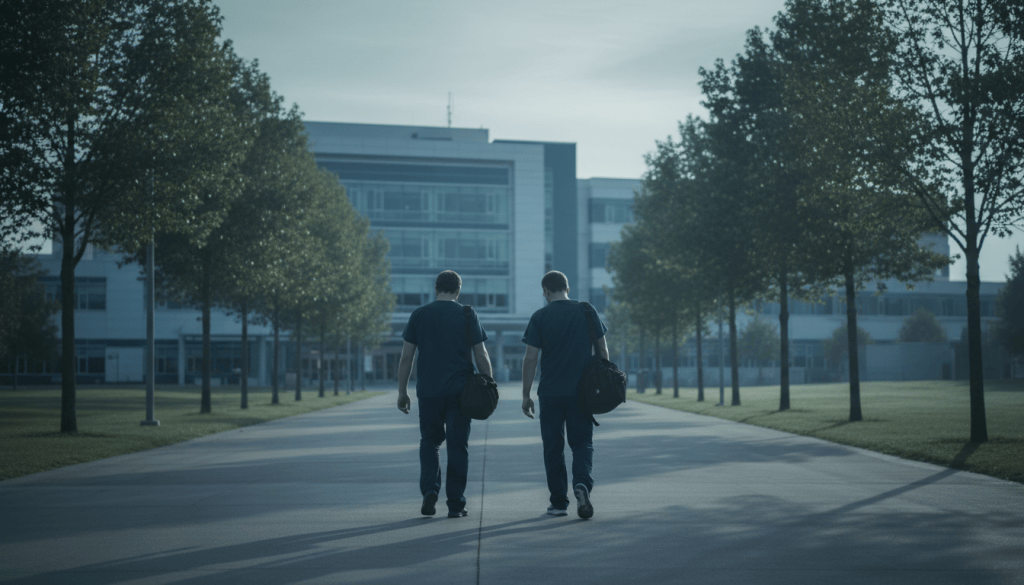
The most important post-call decision may happen before you reach your front door. If you are struggling to stay alert, driving yourself home is not a test of toughness. The ACGME Common Program Requirements effective July 1, 2026 explicitly require programs and sponsoring institutions to ensure safe transportation options for residents who may be too fatigued to return home safely. They also require education in recognizing fatigue and sleep deprivation.
That matters because the resident-side skill is not simply “push through.” It is recognizing when your performance has changed. Re-reading the same line, missing turns, difficulty keeping your eyes open, or realizing that your attention is repeatedly drifting are reasons to stop treating the commute as routine. Use the safe-transport or sleep option available through your program rather than gambling on alertness returning once you start moving.
Do not turn the post-call morning into a second shift
One of the easiest traps is to leave the hospital exhausted and then try to “use” the morning. Groceries. Laundry. Emails. Gym. Appointments. Studying. A long breakfast. Suddenly two hours have passed and the best sleep window you had is disappearing.
There is no universal rule that everyone must sleep immediately after every night shift. But when you know you are sleep-deprived, it helps to make the route from hospital to recovery boring: hand over properly, get home safely, eat or drink what you need, reduce unnecessary stimulation, and protect a sleep opportunity. The ACGME specifically lists strategies such as strategic napping, increasing sleep before and after call, maintaining sleep routines where possible, and using fatigue-mitigation processes without stigma.
The phone is often the enemy of the first hour
After a busy night, scrolling can feel easier than sleeping because it asks almost nothing of you. It can also turn a short wind-down into a much longer period awake. The useful principle is not an elaborate digital detox. It is simply to decide before the shift ends what the first hour at home is for. If the goal is sleep, make sleep the default rather than something you attempt after everything else.
Sleep enough to recover, but think about the next night too
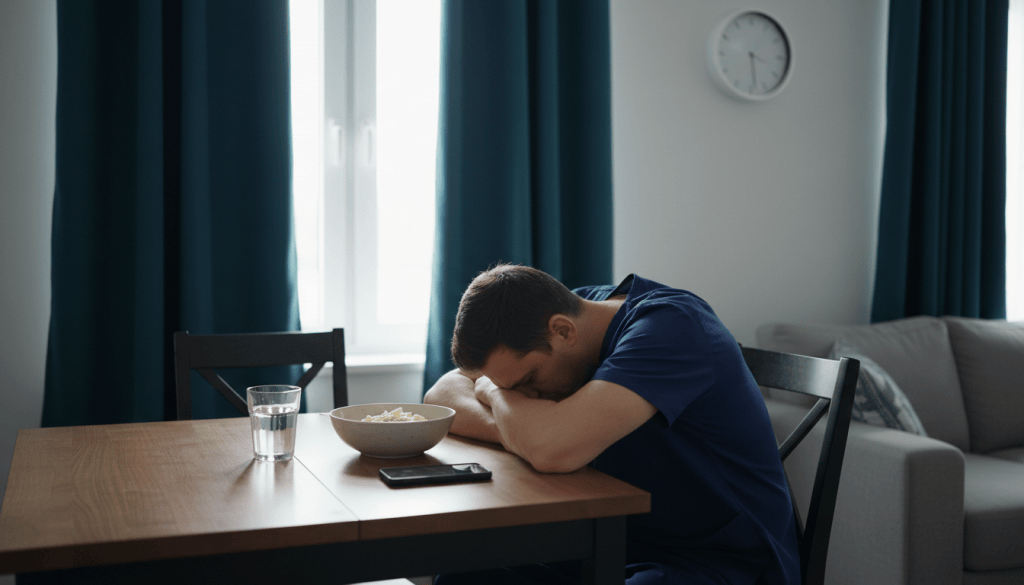
Post-call sleep is awkward because you are solving two problems at once: acute sleep loss and the need to return to a workable sleep schedule. The answer depends heavily on whether you are starting another night shift, returning to days, or actually have time off.
If another night is coming, daytime sleep is part of preparation for the next shift. If you are switching back to days, sleeping deep into the evening can make the following night harder. There is no single hour count that fits every resident, and rigid prescriptions can be misleading. A more useful question is: what sleep do I need now, and what schedule do I need to be functional for next?
This is also why “I slept after call” does not necessarily mean you are fully recovered. Sleep timing, interruptions, accumulated sleep debt, and the intensity of the shift all matter. Recovery can extend beyond one nap or one daytime sleep period.
Food, caffeine, and exercise: keep them boring
Residents do not need a special post-call diet. You need something you can tolerate, enough fluid, and a routine that does not make sleep unnecessarily difficult. The same applies to caffeine: it can support alertness during a shift, but taking more near the end of the night may work against the sleep you are trying to get once home.
Exercise is similar. Regular exercise is part of the fatigue-mitigation strategies discussed by the ACGME, but the morning after a punishing call is not the moment to prove that you can complete a hard workout. Movement may feel good; exhaustion is still exhaustion. The point of the post-call period is recovery, not winning a second competition against yourself.
What about studying after call?
This is where surgical residents can be unnecessarily hard on themselves. A quiet post-call afternoon looks like available study time on a calendar. Cognitively, it may be poor-quality time. If you are repeatedly reading without retaining, there is little virtue in sitting with a textbook simply because you planned to.
A small, low-friction task can make sense: save a paper from a case, write down a question to review later, or note one learning point before leaving the hospital. Deep study can wait until you are capable of actually learning. That is not laziness; it is recognizing that training includes managing your own performance.
The emotional comedown is real too
Not every difficult post-call morning is purely about sleep. Overnight work can involve uncertainty, repeated interruptions, conflict, emergencies, or simply sustained responsibility. When the pace stops, the mind sometimes keeps going. You may replay decisions that were already handed over or remember tasks you completed hours earlier.
That does not require inventing a dramatic story about every call. It means recognizing that cognitive load has an after-effect. A brief handoff note to yourself—what needs follow-up when you return, what you want to read, what is already someone else’s responsibility—can help draw a boundary around the shift. Once care has been safely transferred, you are allowed to stop mentally carrying the entire list home.
When fatigue becomes a safety issue
There is a difference between being tired and being too fatigued to perform safely. Residency training is supposed to teach that distinction rather than reward residents for ignoring it. The 2026 ACGME requirements state that programs must educate residents and faculty in recognizing fatigue, alertness management, and mitigation, and that there should be no stigma or negative consequence for using appropriate fatigue-mitigation strategies.
For residents, that translates into a professional obligation: if fatigue is affecting your ability to drive, assess patients, make decisions, or remain attentive, escalate it. Patient safety sometimes means handing responsibility to a rested colleague. This connects directly with the skills discussed in giving a surgical handoff and speaking up when the hierarchy feels heavy.
A simple post-call sequence
Rather than a complicated routine, think in this order:
- Finish the handoff. Close the clinical loop before leaving.
- Check whether you are safe to travel. Do not normalize dangerously sleepy driving.
- Reduce friction between hospital and sleep. Avoid stacking errands onto severe fatigue.
- Protect a real sleep opportunity. Shape it around whether your next shift is a night or a day.
- Recover before demanding productivity from yourself. Food, hydration, movement, study, and social plans can be adjusted to the day you actually had.
If you are preparing for the shift rather than recovering from it, see the surgical night-shift checklist. For a wider view of where call fits into training, read what actually fills a surgical resident’s day and what surgical residency is really like.
The part of residency nobody scores
No evaluation form gives you points for getting home safely, sleeping instead of forcing an unproductive study session, or noticing that you are too tired to keep functioning normally. Yet these are part of becoming a surgeon. Training is not only learning how to operate when you are switched on. It is learning to recognize when your performance is fading, transfer responsibility safely, recover, and come back able to think clearly again.
Sources and Further Reading
- ACGME Common Program Requirements, Residency requirements effective July 1, 2026.
- Home Call and Sleep in Orthopaedic Surgeons, prospective longitudinal study, 2025.
- Night-shift burden and well-being after ICU versus non-ICU night shifts, paired resident study, 2026.
- Biosensors, Biometrics and Capabilities in Practice, study of surgical residents, sleep and duty patterns, 2025.





Leave a Reply