Last reviewed: October 27, 2026.
Vacation sounds simple until you are a surgical resident. You request the dates, someone covers the service, and you leave. On paper, that is the whole process. In practice, taking time away from a surgical team can feel surprisingly complicated.
There is the practical problem of coverage. There is the fear of missing an interesting case. There is the sense that your co-residents will absorb work because you are gone. There may be an inbox, unfinished discharge issues, clinic results, research deadlines, exam preparation, and a phone that makes the hospital feel much closer than it actually is.
Then there is the deeper problem: residency trains you to notice what needs doing. That habit is useful in the hospital. It can make genuine time off difficult.

Vacation is different from a post-call day
A post-call day is recovery from work. A weekend may be partly occupied by sleep, errands, reading, or anticipating the next week. Vacation is supposed to create a longer interruption in that cycle.
That distinction matters because surgical residency tends to compress ordinary life into the edges of the schedule. Laundry, appointments, family calls, exercise, studying and administrative tasks migrate into whatever time is left. If vacation becomes merely a larger container for those deferred tasks, you may return having been away from the hospital without feeling meaningfully away from residency.
This does not mean every vacation needs to involve travel. It means time off works best when at least part of it is protected from becoming another productivity project.
Why residents can feel guilty about leaving
Surgery is team-based, and absence is visible. If one resident is away, another person may carry the pager, cover the floor, assist a case, or absorb a clinic. That reality can produce guilt even when the leave is completely legitimate.
But a functioning training program cannot depend on every resident being continuously available. Coverage is a scheduling responsibility, not a personal debt that makes ordinary leave morally questionable. Good colleagues make the handoff clean; they do not need to apologize for having lives outside the hospital.
The same principle appears elsewhere in residency. A safe surgical handoff is not abandonment of responsibility. It is the transfer of responsibility. Vacation requires the same mental shift, only for longer.
What the rules actually say in the United States
For ACGME-accredited training, the details of ordinary vacation and sick leave are generally set by the employer, sponsoring institution and program rather than by a single national vacation allowance. The ACGME does, however, impose broader protections around time away from clinical work. Its current requirements include limits on clinical and educational work hours and one day free of clinical work and education in seven when averaged over four weeks. Sponsoring institutions must also maintain leave policies, including specified medical, parental and caregiver leave protections.
Those requirements are minimum accreditation standards, not a description of what every resident’s annual vacation entitlement looks like. Your contract and program policy remain the documents that determine ordinary vacation days, how requests are made, whether blocks are fixed, and how unused leave is handled.
That distinction matters internationally too. Residency schedules, employment law and annual-leave entitlements differ substantially between countries. Do not import a U.S. assumption into Germany, the UK, Australia or another training system—or vice versa.
A clean vacation starts before the last shift
The best way to disconnect is to make the service less dependent on information that exists only in your head.
Before leaving, close what can reasonably be closed. Make pending results visible. Identify patients or administrative issues likely to generate questions. Clarify who owns follow-up. Do not create a giant defensive document that nobody will read; give the covering resident the information that changes what they need to do.
For longitudinal responsibilities, the key question is simple: if something important happens while I am away, is it obvious who receives it? If the answer is no, the system is not ready for your absence yet.

The temptation to keep checking
The phone is where vacation often quietly fails.
A resident may stop physically working but continue checking messages, asking how a patient did, following the operating list, or opening the electronic record. Sometimes there is a legitimate reason. Often there is not. The behavior feels harmless because each check takes only a minute, but it keeps the service cognitively active.
This is not merely theoretical. In a 2024 national study of 3,024 U.S. physicians, 70.4% reported performing patient-care-related tasks while on vacation. Full EHR inbox coverage was associated with lower odds of burnout, while spending at least 30 minutes per vacation day on patient-related work was associated with higher burnout. The study was cross-sectional, so it cannot prove that vacation work causes burnout, but it captures a familiar systems problem: time off is less restorative when clinical responsibility follows the physician home.
For residents, the practical lesson is not “never think about surgery.” It is to make a deliberate distinction between curiosity and responsibility. Wondering how a case went is normal. Feeling that you must monitor the service despite having handed it over is different.
You will miss cases
This is one of the hardest facts for procedure-focused trainees to accept.
The rare operation will happen while you are away. A case you followed may finally reach the OR. Someone else may get an opportunity you wanted. Surgical training is long, but individual opportunities can feel scarce, especially when you are trying to build autonomy.
The answer is not to optimize every week of residency for maximum case exposure. Operative development is cumulative. It depends on preparation, trust, feedback, repetition and progressive responsibility—the same processes discussed in how residents earn operative autonomy. One missed case is visible. The value of being rested enough to learn well across hundreds of future cases is less visible.
Do you need to study on vacation?
There is no universal answer. An examination date may be close. You may genuinely enjoy reading about surgery. A research deadline may be immovable.
The useful question is whether the studying is chosen or compulsory in your own head. A short planned block of reading is different from carrying the constant feeling that every hour not spent studying is educational failure.
Residency already creates abundant exposure to medicine. Time away can also restore things training tends to narrow: relationships, sleep, hobbies, physical activity, ordinary conversation and the ability to think about something other than the hospital. The site’s guide to life outside surgical residency explores why these parts of life become so difficult to schedule in the first place.
Coming back can feel strangely difficult
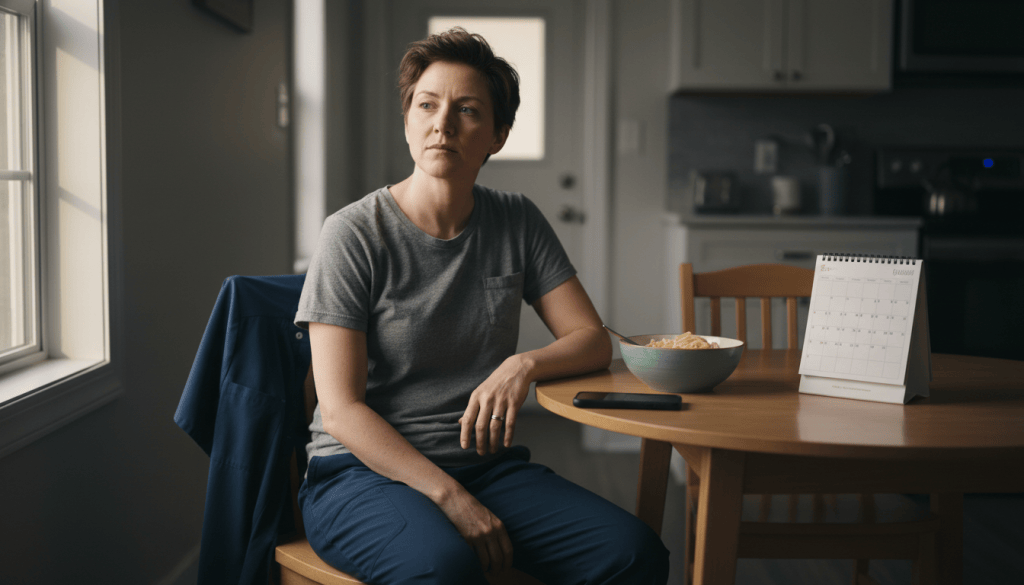
After several days away, the service has moved on without you. Patients have been discharged. New patients have arrived. The OR list has changed. Plans you knew in detail may no longer matter.
Residents sometimes respond by trying to learn everything that happened while they were gone. Usually that is unnecessary. On return, focus on the current state of the service: who is here now, what is active now, what decisions are pending now, and what your role is today.
There may also be a brief loss of rhythm. After enough time away, the hospital can feel unusually loud and fast for the first few hours. That is not evidence that you have become less capable. Routine returns quickly.
Time off is not a reward for finally becoming exhausted
One unhelpful residency habit is treating rest as something that becomes legitimate only after obvious depletion. That turns vacation into emergency maintenance.
Current surgical literature continues to document substantial burnout and the importance of the clinical learning environment to resident well-being. A 2025 mixed-methods study in surgical residents found that the learning environment was associated with well-being and professional development. These studies do not tell an individual resident exactly how much vacation to take, but they reinforce a broader point: resident functioning is shaped by systems and working conditions, not simply by individual toughness.
The goal of vacation is not to prove that you can stop caring about the service. It is to trust that a team can continue safely without you for a defined period—and that you can return without having monitored every hour of your absence.
A practical way to leave
Before your last shift, identify what truly needs transfer, name the person or system that owns it, and communicate it clearly. Decide in advance whether you will check work messages at all. If you are not on call and no policy requires availability, do not create an unofficial version of call for yourself. Protect at least part of the leave from studying and administrative catch-up. When you return, learn the service as it exists now rather than reconstructing everything you missed.
None of this makes residency less serious. It makes responsibility more transferable, which is exactly how safe teams are supposed to work.
Sources and Further Reading
- ACGME — Common Program Requirements, residency requirements effective July 1, 2026.
- ACGME — Frequently Asked Questions, including resident well-being and leave.
- Vacation Days Taken, Work During Vacation, and Burnout Among US Physicians, JAMA Network Open.
- Resident Flourishing in the Surgical Learning Environment: A Mixed Methods Study, Journal of Surgical Research, 2025.
- Understanding Burnout among Surgical Residents: A Mixed Method Study, Scientific Reports, 2025.





Leave a Reply