Last reviewed: October 2026.
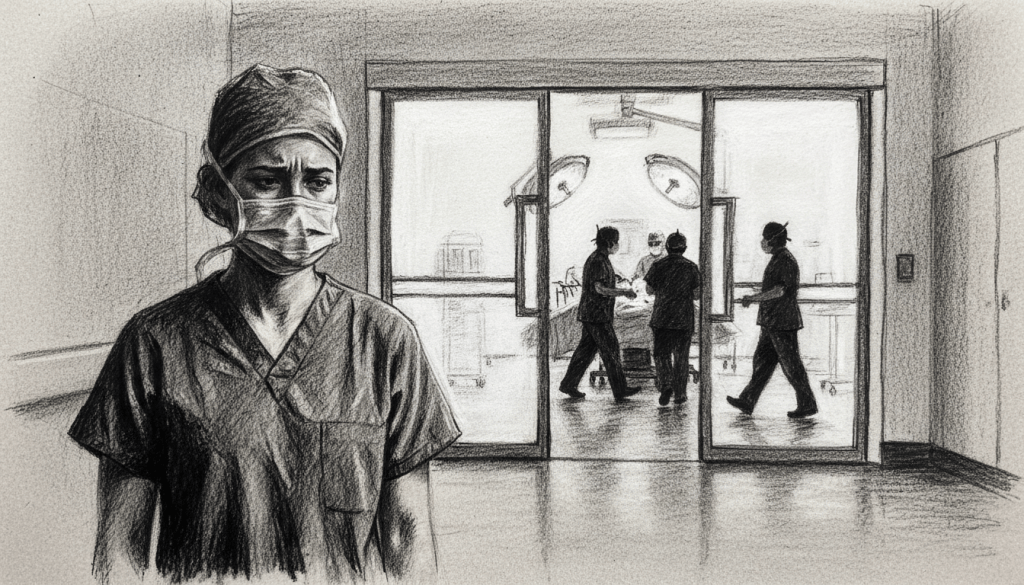
There is a particular kind of insecurity that surgical training can produce. You watch someone present a patient without hesitation, answer a question you were still trying to understand, or move through an operation as if the anatomy has always been obvious to them. From the outside, they look certain. From the inside, you feel unfinished.
That gap is fertile ground for imposter feelings.
The problem is that residency makes uncertainty public
Many jobs let people learn privately. Surgical residency often does the opposite. You are asked questions in front of others. Your decisions are reviewed. Your technical performance is visible. You work beside people who are further along than you and whose competence may look effortless because you did not witness the years that created it.
The result is a distorted comparison: your internal uncertainty versus someone else’s external performance.
Imposter phenomenon is not rare in surgical training
A 2026 scoping review found imposter phenomenon to be highly prevalent among residents in surgical specialties and associated in the literature with problems such as burnout, anxiety, and emotional exhaustion. Earlier work in general surgery also found high levels of significant or severe imposter feelings among respondents.
That does not mean every uncomfortable moment in training is “imposter syndrome.” Sometimes you genuinely do not know enough yet. Sometimes you need more practice. Sometimes the feedback is correct. The important distinction is this: having gaps does not mean your entire place in training is fraudulent.
Competence and confidence do not rise at the same speed
A resident may become substantially better before feeling substantially better. You can be safer, more organized, more useful, and more knowledgeable while still noticing everything you cannot yet do.
In fact, increased knowledge can initially make uncertainty more visible. You begin to see the complexity that was invisible when you knew less.
The most dangerous response is pretending
Imposter feelings can push residents toward performance rather than learning: avoiding questions, hiding uncertainty, staying silent, or trying to look more independent than they are.
That strategy protects appearance at the expense of growth. A safer response is specific honesty: “I understand this part, but I am uncertain about this decision.” That gives the supervisor something real to teach.
Use evidence instead of mood
When your internal assessment says, “I am terrible at this,” ask for more concrete evidence.
- What can you do now that you could not do three months ago?
- Which tasks require less supervision?
- What feedback has repeated across different seniors?
- Where are you still making the same mistake?
- Which skills are actually improving, even if slowly?
Specific evidence gives you a more accurate picture than a bad shift.
Mentorship and psychologically safe teams matter
The 2026 review highlighted mentorship, coaching, inclusive environments, and education as potential ways to reduce imposter phenomenon. That makes sense. It is easier to interpret uncertainty as part of training when the people around you behave as if questions are expected rather than shameful.
From the resident side
One of the strangest parts of becoming competent is that the feeling of competence may arrive late. The outside world may begin giving you more responsibility before your internal voice has updated.
You do not need to convince yourself that you are secretly excellent. A more useful position is quieter: you are in training, you have real gaps, you are improving, and you are allowed to need supervision while that happens.
Related reading: How Surgical Residents Earn Operative Autonomy, How to Get Useful Feedback, and Not Knowing Yet: Working With Uncertainty.






Leave a Reply