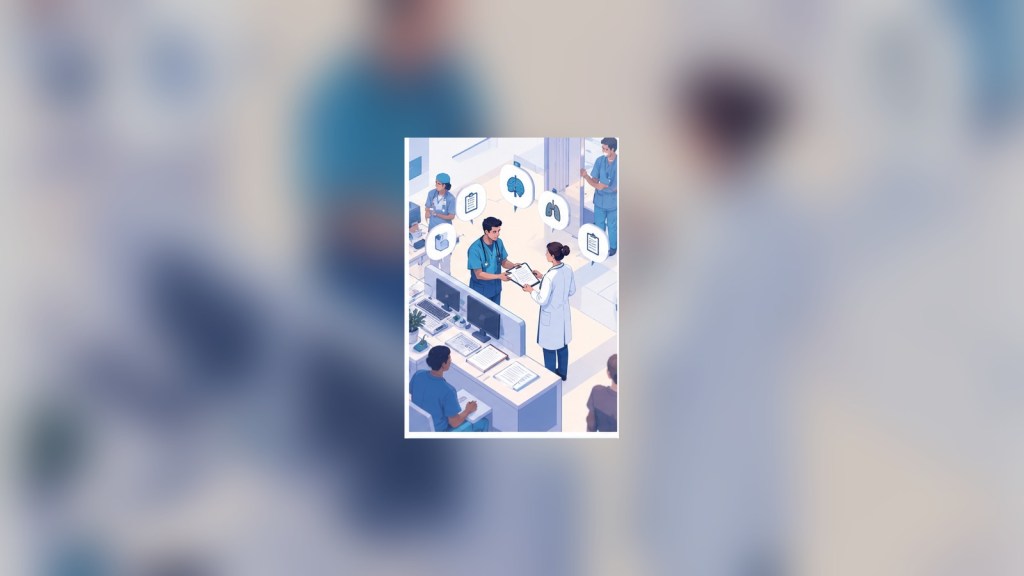
Surgical residency can look fragmented from the outside. One month you are on the ward, then in intensive care, then emergency surgery, then clinic, then a subspecialty service where everybody seems to speak in abbreviations you have never heard before.
But the rotations are not random. Each one is supposed to train a different part of the job. The useful way to think about them is not “Where am I posted?” but “What ability should I leave this rotation with?”
The surgical ward: learning ownership
The ward is where residents learn that surgery is much bigger than the operation. You follow recovery, recognize when progress is not normal, coordinate investigations, communicate plans, manage discharge, and keep dozens of small decisions moving in the right direction.
The ward teaches continuity. It is where you start understanding that an operation is one event inside a much longer patient journey.
Emergency surgery: learning to decide before everything is known
Emergency work teaches prioritization and uncertainty. The history may be incomplete. Imaging may not yet exist. Several patients may arrive at once. The important skill is learning which information changes the next decision and which problem cannot safely wait.
You also learn escalation. A junior resident does not need to independently solve every emergency. They need to recognize the point at which a senior needs to be involved and communicate the problem clearly.
The ICU: learning physiology after the operation
Intensive care forces residents to think beyond a single organ or procedure. Hemodynamics, ventilation, renal function, infection, nutrition, sedation, fluid balance, and organ support become part of one picture.
The ICU also teaches humility. Postoperative problems rarely stay neatly inside one specialty, and good surgical care depends heavily on collaboration with intensive-care, anesthesia, nursing, pharmacy, physiotherapy, and other teams.
The operating room: learning performance under supervision
The OR is where preparation becomes visible. Anatomy, indication, imaging, instrument handling, communication, anticipation, and decision-making all meet in one place.
Early residents may focus on technical steps. With experience, the learning shifts toward judgment: why this approach, why this plane, when to continue, when to change strategy, and how to keep the whole team oriented.
If you want to understand how operative responsibility should grow, read What Surgical Residency Is Really Like and the section on graduated autonomy.
Clinic: learning who actually needs an operation
Clinic is often underestimated by residents who are eager to operate. It is where surgical judgment starts before the operating room. You learn to match symptoms, imaging, examination, patient goals, risk, alternatives, and expected benefit.
Seeing patients before and after surgery also makes outcomes more real. You understand why the indication mattered in the first place.
Subspecialty rotations: learning a different mental model
Trauma, colorectal, HPB, vascular, endocrine, transplant, breast, upper GI, and other rotations each develop different habits. Some are anatomy-heavy. Some emphasize longitudinal cancer care. Some revolve around emergency decisions. Some require mastering complex perioperative pathways.
The point is not to become a subspecialist during every rotation. It is to understand how that service thinks.
What a good rotation should leave behind
- A clearer mental model of the common problems on that service.
- A more reliable approach to prioritization.
- Greater independence appropriate to your level.
- Better understanding of when to escalate.
- Specific technical or procedural progress.
- A few pieces of feedback you can actually act on.
- Better understanding of how the specialty fits into the whole surgical system.
Do not judge a rotation only by case count
Operative exposure matters. But a rotation can be educational even when you are not operating every day if you are becoming better at assessment, decision-making, postoperative care, communication, or managing complexity.
The problem is not non-operative learning. The problem is service work with no visible progression.
The resident-side question
At the beginning of every rotation, ask: “What should I be able to do better by the end of this?”
That one question turns a schedule into a training plan.





Leave a Reply