Last reviewed: October 2026.
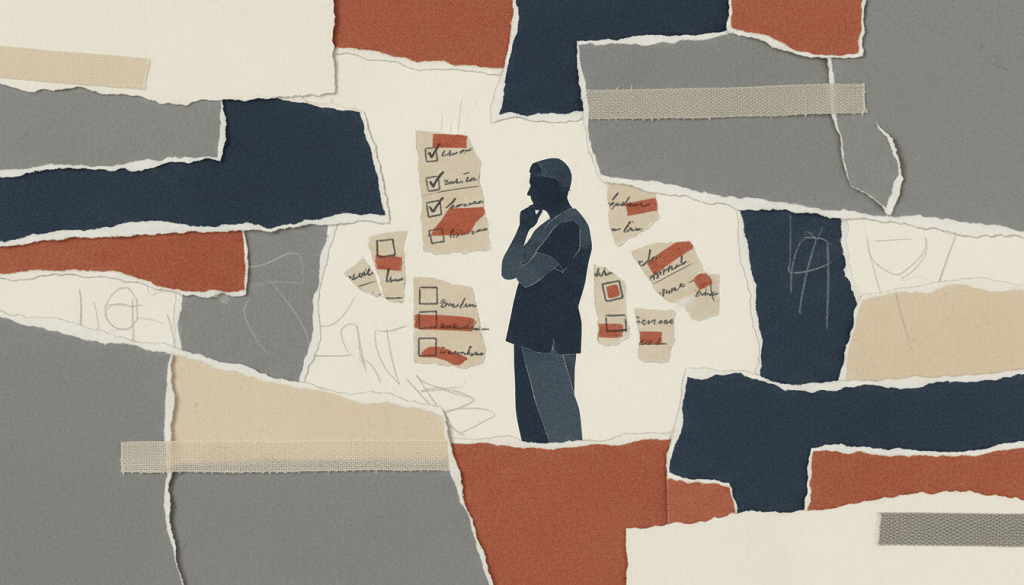
Some residency mistakes are objectively small and emotionally enormous.
You forget a task and catch it later. You communicate something poorly. You misunderstand an instruction. You realize the senior had to repeat a point you should have remembered. Nothing dramatic happens, but the moment follows you home anyway.
Responsibility changes the meaning of being wrong
In medical school, being wrong often produces a low score or a correction. In residency, mistakes exist inside real work. Even when the consequence is minor, the resident understands that the system depends on people noticing, communicating, and following through.
That is why a small mistake can feel larger than it looks from the outside. It touches the new identity you are trying to build: reliable, safe, useful.
The wrong response is hiding
Embarrassment can make residents want to minimize, delay, or quietly fix an error without telling anyone. That may protect pride, but it weakens supervision.
The safer pattern is to make the relevant problem visible, communicate appropriately, correct what can be corrected, and learn why the failure occurred. The exact response depends on the situation and local policy, but transparency matters.
Ask what failed: knowledge, attention, communication, or system?
“I need to be more careful” is rarely enough. A better review is more specific.
- Knowledge: Did I not know something I should review?
- Attention: Was I interrupted or overloaded?
- Communication: Was the plan unclear or not confirmed?
- Memory: Was I relying on my head instead of a task system?
- Escalation: Did I wait too long to ask for help?
- System: Was there an unclear process or missing safeguard?
A specific cause creates a specific improvement.
Residents need support after errors, not only prevention lectures
Research on resident experiences of medical error has found that residents’ understanding of responsibility evolves during training and that role modeling, workplace culture, and emotional support shape how they learn after errors. Another survey found many surgical trainees felt inadequately trained in recovering from major technical errors.
That matters because “do not make mistakes” is not a complete curriculum. Training also has to teach what to do when something goes wrong.
Do not turn one mistake into a personality diagnosis
“I forgot this task” is information. “I am unreliable” is an identity claim. The first can be fixed. The second tends to produce shame without a plan.
Residents improve when they can be honest about weaknesses without treating every weakness as proof that they chose the wrong career.
What I would want a resident to take from a small mistake
Not “never do anything wrong again.” That is impossible.
Instead: notice earlier, communicate more clearly, build a better system, ask for help sooner, and do not make the next person discover the problem by accident.
Related reading: Being Wrong in Surgical Residency, The Surgical Resident Pocket Notebook, and What Makes a Good Surgical Resident?.





Leave a Reply