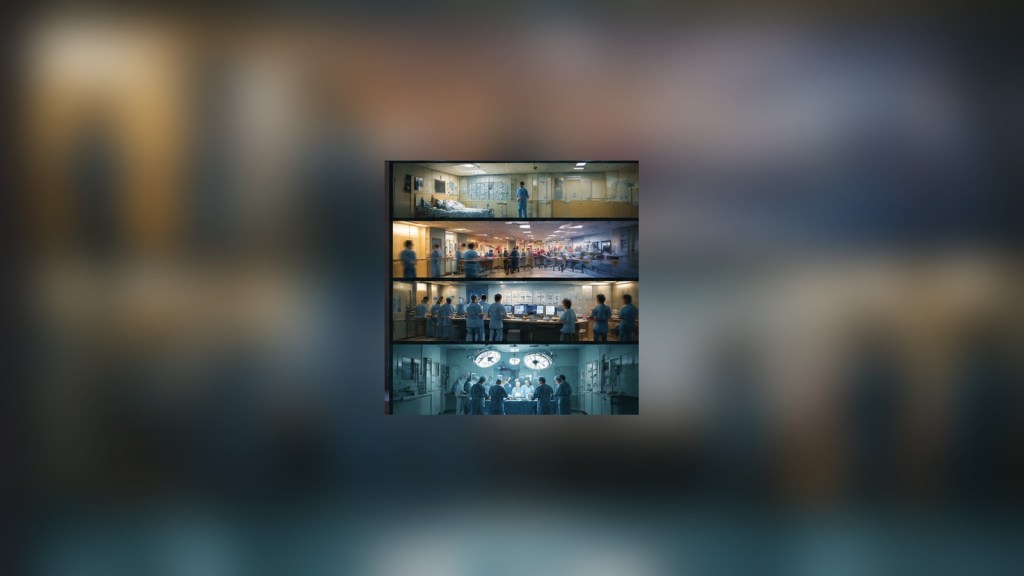
Surgical training can look very surgeon-centered from the outside. The consultant teaches the operation. The senior resident teaches the junior. The resident studies the anatomy and learns the case.
Real hospital learning is much wider than that.
Residents learn from nurses who have watched hundreds of postoperative recoveries, from anesthesia teams who see physiology change minute by minute, from ICU clinicians who manage the consequences of major surgery, from radiology, physiotherapy, dietetics, pharmacy, stoma teams, wound teams, and the people who understand how the hospital actually moves.
Nurses often know the patient in a different way
A resident may see the patient during rounds and several reviews. Nursing staff see what happens between those moments: whether the patient is mobilizing, eating, becoming confused, asking repeatedly for pain medication, looking subtly different, or simply not progressing the way yesterday’s plan expected.
Learning to listen to that information is not giving up medical judgment. It is using a larger data set.
Anesthesia teaches you what the operation does to the whole patient
Surgeons naturally focus on the operative problem. Anesthesia forces attention onto physiology, airway, hemodynamics, analgesia, fluid balance, medications, and how the patient is tolerating everything happening around the operation.
Residents who pay attention to the anesthesia side of the room become better at understanding why a case is easy for one patient and physiologically expensive for another.
The ICU teaches you that the operation is only one chapter
Major surgery does not end at skin closure. Intensive-care teams make that impossible to forget. Organ support, infection, nutrition, delirium, respiratory function, renal function, mobilization, and recovery all become part of the same surgical story.
This is one reason an ICU rotation can change how a resident thinks in the operating room: you begin imagining the postoperative patient while the operation is still happening.
Radiology teaches residents to ask better questions
A vague request produces vague thinking. Surgical residents get better when they can explain what they are actually trying to establish and why the answer matters.
Discussing imaging with radiologists also teaches the difference between “there is an abnormality” and “this finding changes what we do next.”
Allied health teams show you whether the plan works outside the note
A discharge plan can look perfect in a medical record and fail completely when the patient cannot mobilize, eat adequately, manage a new stoma, understand the medication plan, or function safely at home.
Physiotherapists, dietitians, pharmacists, occupational therapists, stoma nurses, and other specialists expose the difference between writing “discharge when medically fit” and actually making discharge possible.
Good residents learn without becoming defensive about hierarchy
Hospitals have formal hierarchies. Expertise does not always follow the same lines. Somebody can have less medical authority and far more experience with a particular device, workflow, recovery pattern, or practical problem.
The resident who can use that expertise without feeling threatened becomes safer faster.
Teamwork is not just being pleasant
Real teamwork is operational. Does the nurse know the plan? Does anesthesia understand what the surgeon expects next? Has the senior heard the concern? Does the person taking over know what remains unresolved?
A friendly team can still communicate badly. A high-functioning team makes important information hard to lose.
The part medical school rarely explains
Becoming a surgeon is not only joining a line of surgeons who teach you. It is learning how your decisions interact with an entire system of people whose work is connected to the same patient.
Some of the best education in residency arrives without being labeled as teaching.
Related reading: Belonging in Surgical Residency and Why Small Acts of Kindness Matter.





Leave a Reply